

Peringkat 3 · Setahun dan seterusnya · Artikel 65 · Wave 2
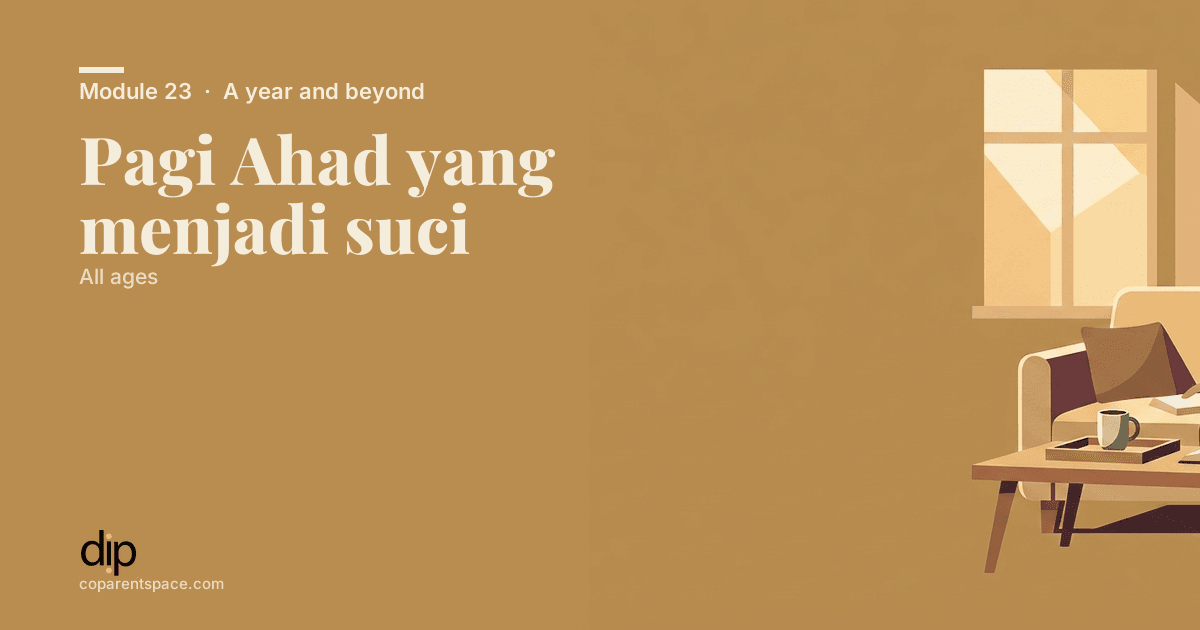
Menjelang tahun kedua, kamu ada satu Pagi Ahad yang jadi milik kamu sendiri. Bukan jenis yang kosong sebab anak-anak ada di rumah satu lagi. Jenis yang penuh, tapi penuh dengan benda yang kamu pilih sendiri. Kopi dalam cawan tertentu, cahaya menerusi tingkap tertentu, buku tertentu di atas sofa tertentu. Pagi tu dah jadi sesuatu yang kamu lindungi.
Artikel ni pasal macam mana satu ritual kecil menjadi suci tanpa kamu terlalu mengagung-agungkannya, empat ramuan untuk satu Pagi Ahad yang bertahan, apa nak buat bila hidup cuba merampasnya semula, beza antara rutin dan tempat berlindung, dan kenapa pagi macam ni salah satu penanda senyap Peringkat 3.
Macam mana sesuatu menjadi suci
Pagi Ahad yang menjadi suci tu tak dirancang untuk jadi suci. Ia bermula sebagai satu hakikat logistik. Anak-anak tak ada. Kamu ada masa. Kamu buat sesuatu dengannya.
Apa yang menukar masa tu jadi sesuatu yang lebih ialah empat benda kecil, yang kebanyakannya tak disedari pada masa tu.
1. Kamu buat benda yang sama lagi. Pagi Ahad pertama kamu sendirian, kamu buat sesuatu. Ahad kedua kamu buat sebahagian daripada benda yang sama, dengan sikit-sikit penyesuaian. Menjelang Ahad kelima atau keenam, satu bentuk dah terbentuk. Kamu sedang mengulang, dan pengulangan itu sendiri sedang membina sesuatu.
2. Kamu berhenti meminta maaf sebab kamu sukakannya. Pada awalnya, kamu mungkin sebut pasal Pagi Ahad tu kepada kawan dengan nada sedikit membela diri. Aku tahu ni benda kecil, tapi... Selepas berbulan-bulan, rasa nak membela diri tu hilang. Kamu berhenti menerangkan kenapa Pagi Ahad kamu dibenarkan jadi apa adanya.
3. Ritual tu mula buat kerja untuk kamu. Tanpa kamu menjejaknya, Pagi Ahad tu jadi salah satu benda yang memegang seluruh minggu bersama. Hari Isnin jadi kurang berat sebab Ahad sebelumnya dah baik. Hari Sabtu terasa lebih ringan sebab Ahad dah nak tiba.
4. Ruang tu mula terasa macam milik kamu. Kerusi tu, cahaya tu, cawan tu, buku tu, kesunyian tertentu satu Pagi Ahad di rumah kamu. Benda-benda ni terhimpun. Ruang tu jadi salah satu tempat dalam hidup kamu yang paling buat kamu rasa macam diri kamu sendiri.
Suci di sini bukan satu perkataan agama. Ia cuma bermaksud sesuatu yang menjadi lebih daripada jumlah cebisan-cebisannya. Satu ritual kecil yang membesar jadi satu bahagian senyap yang memikul beban dalam hidup kamu.
Empat ramuan untuk satu Pagi Ahad yang bertahan
Bukan setiap Pagi Ahad menjadi suci. Sesetengahnya kekal sebagai masa kosong sahaja. Bezanya terletak pada empat ramuan.
Ramuan 1: Satu bentuk yang jelas, walau sekecil mana pun
Pagi Ahad yang bertahan ada bentuk yang khusus. Bukan bentuk yang kaku, tapi yang boleh dikenali. Kamu bangun tanpa loceng penggera. Kamu buat kopi dengan cara yang khusus. Kamu duduk di tempat yang khusus. Kamu membaca atau menulis atau mendengar atau sekadar duduk.
Bentuk tu boleh jadi apa-apa sahaja, tapi ia kena khusus. Ahad yang kabur tak bertahan. Buat apa-apa yang aku rasa nak buat cenderung menghasilkan hanyutan. Satu bentuk, walaupun yang longgar, memberi pagi tu struktur.
Ramuan 2: Keseronokan yang betul-betul milik kamu
Apa yang kamu buat pada pagi tu kena jadi sesuatu yang kamu betul-betul suka. Bukan apa yang orang lain nampak macam buat pada Pagi Ahad. Bukan apa yang kamu fikir Pagi Ahad sepatutnya nampak macam mana. Bukan benda yang kamu biasa buat dulu sebab perkahwinan tu menuntutnya.
Beberapa soalan yang membantu:
- Kalau tiada siapa yang melihat, apa yang aku akan buat pada Pagi Ahad?
- Apa benda yang diam-diam aku dah lama nak buat tapi tak pernah luangkan masa untuknya?
- Apa yang terasa macam rehat, berbanding apa yang nampak macam rehat?
Jawapannya selalu mengejutkan. Pagi Ahad yang bertahan dibina mengelilingi jawapan yang sebenar, bukan yang dibayangkan.
Ramuan 3: Perlindungan daripada bising
Pagi Ahad terdedah kepada bising. Telefon, berita, e-mel kerja, media sosial, mesej keluarga. Setiap satu ialah satu tarikan kecil pada pagi tu.
Pagi yang bertahan selalunya ada sedikit perlindungan daripada bising. Telefon disenyapkan. E-mel ditutup. Skrol berita ditangguhkan. Walaupun sejam perlindungan dah membawa perbezaan.
Ni bukan sikap berpantang. Ia cuma satu pengakuan yang sifat pagi tu tak serasi dengan kehadiran digital sepenuhnya.
Ramuan 4: Panjang yang cukup
Sesetengah Pagi Ahad terlalu pendek untuk menjadi suci. Sejam tak cukup, kamu baru sahaja masuk ke dalamnya sebelum benda lain dah kena bermula.
Yang lain pula terlalu panjang. Lima jam Pagi Ahad tanpa struktur jadi melelahkan, ritual tu hilang tegangannya dan jadi masa yang longgar.
Titik manisnya biasanya antara 2 hingga 4 jam. Cukup panjang untuk terasa bermakna, cukup pendek untuk mengekalkan bentuknya.
Apa nak buat bila hidup cuba merampasnya semula
Setelah Pagi Ahad tu menjadi suci, benda-benda akan mula cuba merampasnya semula. Kerja menyelinap masuk. Jemputan keluarga mendarat. Komitmen baharu menawarkan diri. Orang yang tak tahu pasal pagi tu akan menganggap Ahad memang lapang secara amnya.
Lima amalan untuk memegang pagi tu.
Amalan 1: Anggap ia dah ditempah
Jangan fikir Pagi Ahad tu sebagai masa lapang yang kamu mungkin isi dengan benda lain. Fikir ia sebagai dah ditempah. Bila jemputan mendarat, jawapannya sama macam untuk mana-mana masa lain yang dah ditempah. Aku ada hal masa tu, boleh kita buat lain kali?
Ni bukan menipu. Pagi tu memang dah ditempah. Dengan diri kamu sendiri.
Amalan 2: Beritahu orang kalau ia penting
Sekali atau dua kali setahun, dengan orang yang asyik bertanya, namakan apa pagi tu sebenarnya. Aku kekalkan Pagi Ahad lapang, ia sebahagian daripada cara minggu aku berjalan. Kebanyakan orang menghormatinya setelah mereka dengar ia disebut secara terus.
Amalan 3: Pilih dengan teliti apa nak ditambah
Sekali-sekala ada benda yang berbaloi ditambah pada Pagi Ahad. Buku baharu, kafe lain, brunch sebulan sekali dengan seorang yang khusus. Tambahan tu kena disengajakan, bukan hanyutan.
Kalau ada sesuatu yang asyik nak masuk ke dalam pagi tu, pandang ia secara terus. Adakah ia betul-betul muat, atau ia sedang merampas? Kalau ia muat, satukan ia. Kalau ia merampas, tolak ia tanpa rasa bersalah.
Amalan 4: Lindungi bentuk asasnya walaupun isinya berubah
Buku khusus yang kamu baca berubah. Kopi khusus berubah. Cuaca khusus berubah. Bentuk asasnya tak berubah. Bangun tanpa loceng penggera. Kopi. Tempat tu. Permulaan yang perlahan.
Walaupun isinya berbeza-beza, bentuk tu bertahan. Bentuk itulah yang menjadikan pagi tu satu Pagi Ahad.
Amalan 5: Jangan terlalu mengagung-agungkannya
Pagi tu suci tapi bukan untuk diagung-agungkan. Ada Ahad yang kamu akan langkau sebab benda lain lebih penting. Ada Ahad yang kamu akan buat dengan buruk sebab kamu penat. Ada Ahad yang ia akan terasa hampa.
Ni tak apa. Pagi yang suci tu kukuh. Ia tak bergantung pada setiap Ahad jadi sempurna. Ia bergantung pada corak tu yang bertahan merentas berbulan-bulan dan bertahun-tahun, dengan segala kepelbagaian yang termasuk di dalamnya.
Kalau kamu dapati diri kamu mula terlalu mengagung-agungkan pagi tu, gelisah bila ia tak menjadi sempurna, mempertahankan setiap minit, kamu dah hilang sesuatu. Longgarkan genggaman tu. Pagi tu akan okey.
Rutin lawan tempat berlindung
Satu pembezaan yang berguna. Sesetengah Pagi Ahad ialah rutin. Yang lain ialah tempat berlindung. Kedua-duanya berkaitan tapi tak sama.
Satu rutin ialah sesuatu yang kamu buat secara tetap sebab membuatnya menghasilkan keputusan yang kamu mahukan. Pagi Ahad yang membantu kamu memulakan minggu dengan baik ialah satu rutin. Berguna, bernilai, tapi sekadar alat.
Satu tempat berlindung ialah sesuatu yang memegang satu bahagian diri kamu yang selebihnya hidup tak betul-betul pegang. Pagi Ahad yang mengembalikan satu bahagian diri kamu ialah satu tempat berlindung. Kurang sekadar alat, lebih bersifat penting.
Kebanyakan Pagi Ahad yang suci ialah kedua-duanya sekali. Ia berfungsi sebagai rutin yang menjadi, dan ia juga berfungsi sebagai tempat berlindung yang memegang sesuatu. Fungsi berkembar itu sebahagian sebab kenapa ia menjadi penting.
Kalau Pagi Ahad kamu hanya satu rutin, berguna tapi tak menyuburkan, ada sesuatu yang sedikit tak kena. Dimensi tempat berlindung tu mungkin hilang. Pandang apa lagi yang pagi tu boleh buat.
Kalau Pagi Ahad kamu hanya satu tempat berlindung, penting tapi tak menghasilkan apa-apa, itu pun tak apa, tapi pertimbangkan sama ada ia boleh menghasilkan sedikit lebih. Sekeping kecil tulisan, sekeping kecil pemikiran, sekeping kecil gerakan ke hadapan yang takkan mengganggu tempat berlindung tu tapi membenarkannya menghasilkan sesuatu.
Kenapa ni satu penanda Peringkat 3
Pagi Ahad yang suci ialah salah satu penanda senyap yang kamu berada dalam Peringkat 3, bukan Peringkat 2 atau Peringkat 1.
Dalam Peringkat 1, Pagi Ahad tanpa anak-anak tak tertanggung. Kamu mengisinya dengan apa-apa sahaja yang bukan kesunyian.
Dalam Peringkat 2, Pagi Ahad tanpa anak-anak boleh dilalui tapi tak menentu. Sesetengahnya baik, sesetengahnya susah. Kamu belum lagi membina seni bina yang menjadikannya baik secara boleh diharap.
Dalam Peringkat 3, Pagi Ahad dah mantap. Ada satu bentuk, dan bentuk tu bertahan, dan pagi tu dah jadi sesuatu yang kamu akan lindungi daripada kebanyakan benda.
Ni bukan penanda kecil. Pagi Ahad yang menjadi suci itu, dalam beberapa cara, ialah satu jawapan kepada soalan boleh tak aku bina satu hidup yang baik daripada semua ni? Jawapan yang pagi tu berikan, minggu demi minggu, ialah boleh. Tanpa kebenaran sesiapa. Tanpa teman sesiapa. Cuma kamu, kopi tu, tempat tu, buku tu, cahaya tu.
Bila Pagi Ahad itu hari bersama anak-anak
Satu nota untuk ibu bapa yang coraknya bermakna kebanyakan Ahad anak-anak bersama mereka, bukan di rumah satu lagi.
Pagi Ahad yang suci tak memerlukan anak-anak berada di tempat lain. Ia boleh jadi pagi yang perlahan bersama mereka. Lempeng, si sulung membaca, si bongsu melukis, tiada gopoh nak mulakan apa-apa. Bentuknya berbeza tapi fungsinya sama.
Kadang-kadang pagi yang suci tu ialah yang sendirian setiap dua Ahad sekali. Kadang-kadang ia yang bersama anak-anak. Kadang-kadang kedua-duanya, dalam nada yang berbeza.
Intinya bukan ketiadaan anak-anak. Intinya ialah kehadiran satu pagi yang mendalam jadi milik kamu, sama ada kamu memegangnya sendirian atau tidak.
Rujukan pantas
Macam mana sesuatu menjadi suci:
- Pengulangan membina satu bentuk.
- Kamu berhenti meminta maaf sebab kamu sukakannya.
- Ritual tu mula buat kerja untuk kamu.
- Ruang tu jadi salah satu tempat yang paling buat kamu rasa diri kamu sendiri.
Empat ramuan untuk satu Pagi Ahad yang bertahan:
- Satu bentuk yang jelas, walau sekecil mana pun.
- Keseronokan yang betul-betul milik kamu (bukan yang dibuat-buat).
- Perlindungan daripada bising.
- Panjang yang betul (biasanya 2 hingga 4 jam).
Lima amalan untuk memegang pagi tu:
- Anggap ia dah ditempah.
- Beritahu orang kalau ia penting.
- Pilih dengan teliti apa nak ditambah.
- Lindungi bentuk asasnya walaupun isinya berubah.
- Jangan terlalu mengagung-agungkannya.
Rutin lawan tempat berlindung:
- Rutin: amalan tetap untuk keputusan yang berguna.
- Tempat berlindung: memegang satu bahagian diri kamu yang selebihnya hidup tak pegang.
- Kebanyakan pagi yang suci ialah kedua-duanya.
Kenapa ni penanda Peringkat 3:
- Peringkat 1: Ahad tanpa anak-anak tak tertanggung.
- Peringkat 2: boleh dilalui tapi tak menentu.
- Peringkat 3: bentuk tu bertahan, pagi tu dah jadi sesuatu yang kamu lindungi.
Bila anak-anak bersama kamu kebanyakan Ahad:
- Pagi yang suci tak memerlukan ketiadaan.
- Bentuk tu boleh jadi pagi yang perlahan bersama mereka.
- Intinya ialah kehadiran satu pagi yang mendalam jadi milik kamu, bukan sama ada kamu memegangnya sendirian.
Penutup
Pagi Ahad ialah bukti senyap setiap minggu yang kamu dah membina sesuatu. Tanpa kebenaran, tanpa teman, tanpa upacara.
Cuma kamu, pagi tu, dan hidup yang kamu bina.
Ini ialah bahan bantuan diri yang menyokong, bukan nasihat perubatan, psikologi, atau guaman, dan bukan pengganti bantuan profesional yang bertauliah. Jika anda atau anak anda mungkin dalam bahaya, hubungi perkhidmatan kecemasan tempatan.