

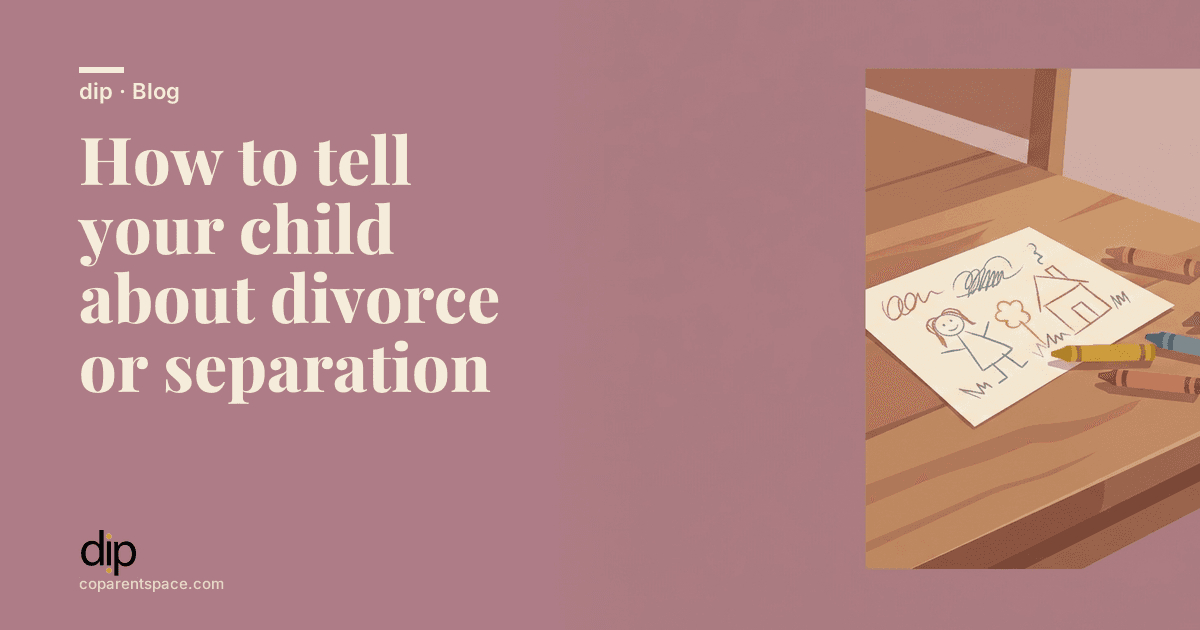
Tell your child in simple, honest words that you both still love them, that the separation is not their fault, and that you will both keep caring for them. If you can, sit down together and share one short, calm version of the news, then leave room for their questions. Keep the first conversation small. You are not delivering a speech, you are opening a door your child can keep walking back through.
Plan the first conversation together
Before you say anything to your child, the two of you need to agree on a short, shared version of what is happening. Children listen for the gaps between your two stories, so the closer your words are, the safer they feel. You do not have to agree on why the marriage ended. You only have to agree on what your child hears.
Keep it to a few sentences. Something like: "We have decided to live in different homes. We both love you very much, and that will never change." You do not need to explain adult reasons, assign fault, or share details that belong to grown-ups. A calm, united front is the single most protective thing you can offer right now.
If telling your child together is genuinely not possible, that is okay. A calm conversation from one parent is far better than a tense one from two. Our guide on telling your child you are separating walks through how to keep the tone steady whichever way you do it.
Choose the timing and the setting
Pick a quiet moment when no one is rushing out the door. Avoid the night before school, a birthday, or a holiday. A weekend morning at home, with the rest of the day free, gives your child time to react and stay close to you both.
Tell siblings together if they are close in age, then make time for each child one to one afterwards, because an eight-year-old and a teenager will need very different follow-up conversations.
Expect the questions, and a few you cannot answer
Children almost always want to know three things: Will I still see both of you? Where will I live? And, quietly, is this my fault? Answer the first two as concretely as you can, and answer the third one clearly every time. Our pieces on when your child asks why and is it because of me give you gentle words for the moment.
Some questions have no clean answer yet, and that is alright. "We are still working that out, and we will tell you as soon as we know" is honest and kind. There is more on holding that uncertainty in the questions you cannot answer. Many children also ask, in their own way, whether the two of you still love each other. Our note on do you still love the other parent helps you answer warmly without giving false hope.
Adjust for your child's age
The same news lands very differently depending on age. A young child needs short sentences and a focus on routine: where they sleep, who picks them up. A guide like how to talk to a 4-year-old keeps it concrete. A school-age child may want more detail and reassurance about friends and home, covered in how to talk to an 8-year-old. A teenager will want honesty and a say in what happens next, which how to talk to a teenager handles with care.
Whatever the age, do more listening than explaining. Listening more than telling is often the most useful thing you can read before this conversation.
After you tell them
The first talk is a beginning, not a conclusion. Children process big news in waves, so expect questions to surface days or weeks later, often at bedtime or in the car. Keep your answers consistent between both homes.
It helps to have a few practical things settled so you can answer calmly: who lives where, and when. A shared calendar takes that guesswork out of the air, and dip's free Temporary Parenting Agreement gives you a simple plan to build together so your child hears the same answers from both of you. When messages between you start to feel sharp, Tone Check can soften the wording before it reaches the other parent. You can explore everything dip offers for separated families on the home page, and the wider library has more for the conversations still ahead.
Above all, let your child know that being sad is allowed, that loving both of you is allowed, and that nothing they feel will push either of you away.