

The calendar
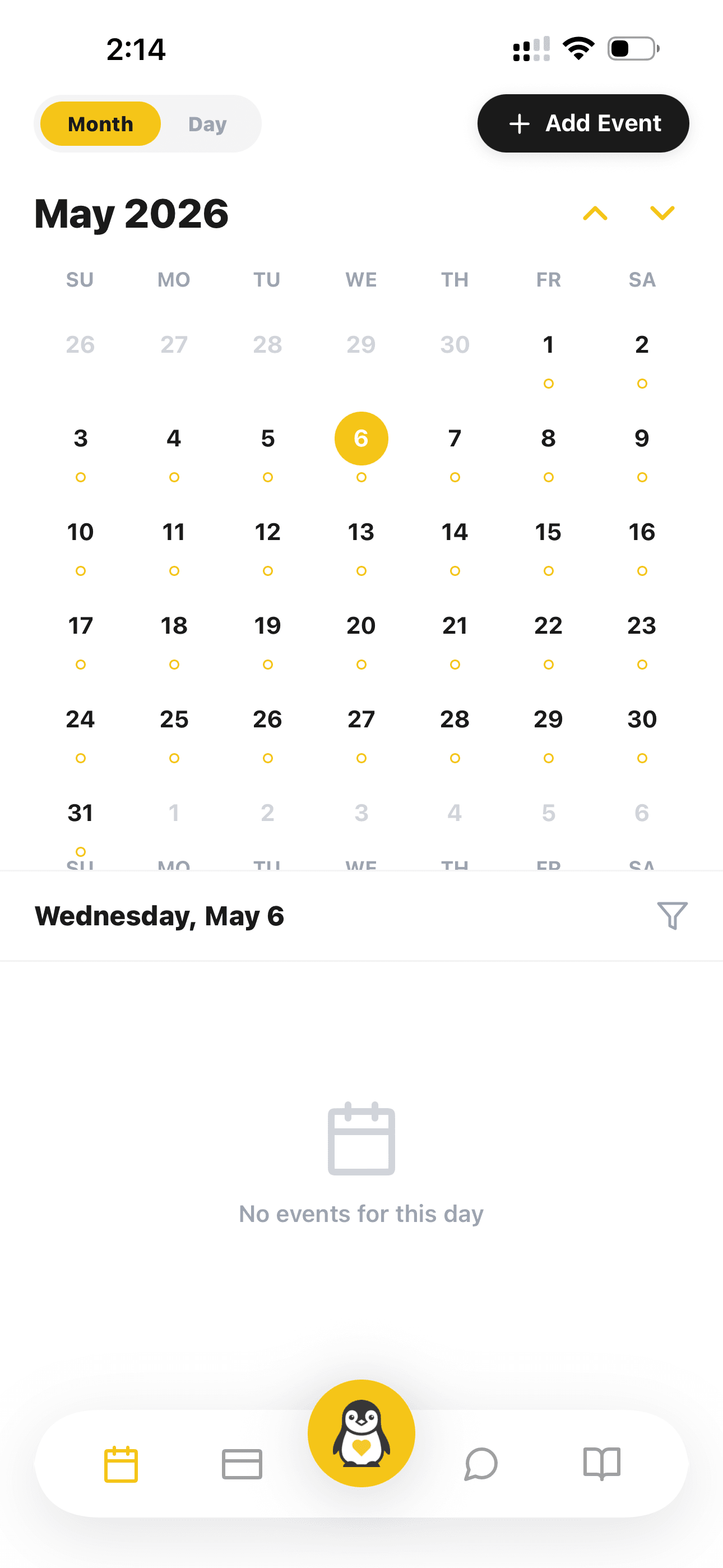
Tomorrow's pick-up is at 3:30. Same as last week. Both of you see it the same way.
A calmer co-parenting app
A small, calm app for two parents who share a child but live in different homes.
Free for both parents. No ads. No data sale.
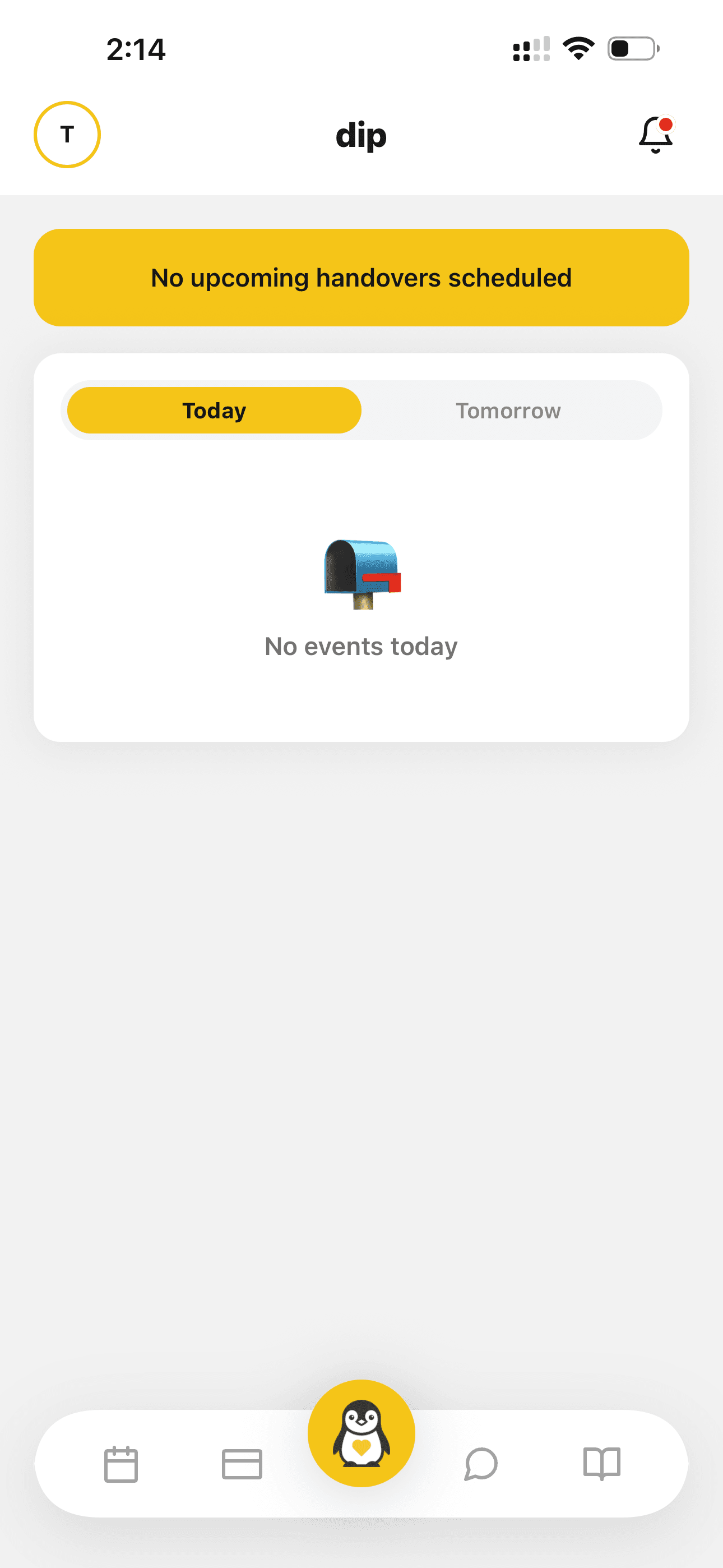
The home screen
What it does
Tomorrow's pick-up is at 3:30. Same as last week. Both of you see it the same way.
Split shared costs without the running tally in your head. Receipts go in once.
A quiet space to write the thing you need to say, before you send it.
“Co-parenting is hard. We can't fix that. We can make the schedule clearer.”
Start here
A short checklist that takes the friction out of pick-up day.
5 min read
First weeksA gentle script for the conversation no parent rehearses.
7 min read
MethodFrom the Pauline Sam Method: predictability over flexibility.
6 min read
MethodHow you say it lands before what you say.
8 min read
The method
A way of thinking about two-home families that puts the child's emotional safety at the centre, and trusts that both parents are doing their best.
Children read parental tension before they hear it spoken. A stable schedule, predictable handovers, and calm communication are some of the strongest anchors for a two-home life.
Pauline Sam is a medical doctor and psychiatrist with twenty years of practice in the Netherlands. The method is hers. The app builds on it.
Two villages
Each parent has their own people. Their own grandparents, their own helper, their own circle. dip respects that. Each parent invites their own village, sets their own permissions, and the two villages never see each other. The only person held by both is the child.
Parent A's village
Invited by Parent AParent A
The full picture
Schedule, expenses, conversation with Parent B, the child's vault.
Grandparents (A's side)
Their pickups
Sees: the week they're collecting. Doesn't see: anything in Parent B's house.
Helper at A's home
Today
Sees: who is collecting, what to pack, allergies. Doesn't see: parent conversation.
Held by both
The child.
When the child is old enough, they get their own gentle space. A place to chat with grandparents on either side, in a setting parents have set up together.
Parent B's village
Invited by Parent BParent B
The full picture
Schedule, expenses, conversation with Parent A, the child's vault.
Grandparents (B's side)
Their pickups
Sees: the week they're collecting. Doesn't see: anything in Parent A's house.
Helper at B's home
Today
Sees: who is collecting, what to pack, allergies. Doesn't see: parent conversation.
Each parent owns their own village. Set permissions, invitations and removals per side, in one tap. The two villages stay separate, the child stays at the centre.
The vault
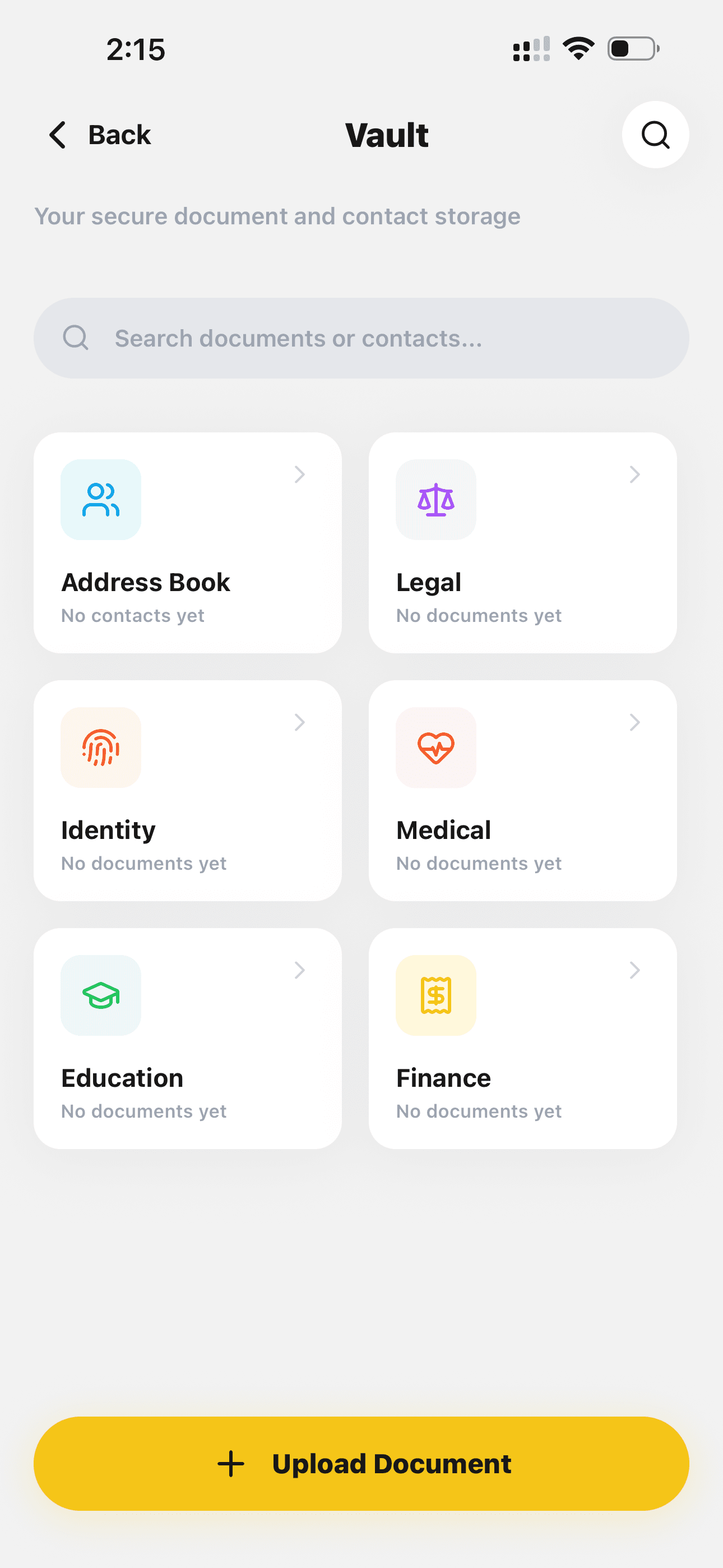
Every child has a vault. One place that holds the schedule changes, the handover notes, the expense receipts, the medical entries, the photos of the spelling book left at the wrong house. Both parents see the same vault. Once something is written, it stays. Nothing in the record can be quietly deleted. Edits leave a visible trail.
One per child
Each child has a single vault. Two homes look at the same one. Never a copy of a copy.
Nothing deletes
Messages, expenses, handover notes, schedule swaps. Once they're in, they stay. No quiet rewrites.
Edits leave a trail
Change a date, correct a number. Both versions stay visible. The record shows what was, and what is.
Yours, not ours
The vault belongs to the family. We don't sell it, mine it, or hand it over. You can export it, any time.
Most days the vault is just a quieter way to remember. The day it matters most, it's the calmest record either of you has.
Why these modules
Most apps would call these "features." We don't. Each one is a small bet about what changes a separated family. Pick one to read why it's in the product.
Module · Homework
The forgotten reading book is the smallest thing. It is also where most arguments between separated parents start.
Putting homework into dip isn't about productivity. It's a quiet rule: the child's school week stops being the parents' battleground. The book is at one home. The next house knows. Tomorrow's spelling list is in the same place both parents look.
Nobody is the parent who forgot. Nobody is the parent who blames. The week just continues.
What changes
Free for both parents. No ads. No data sale.